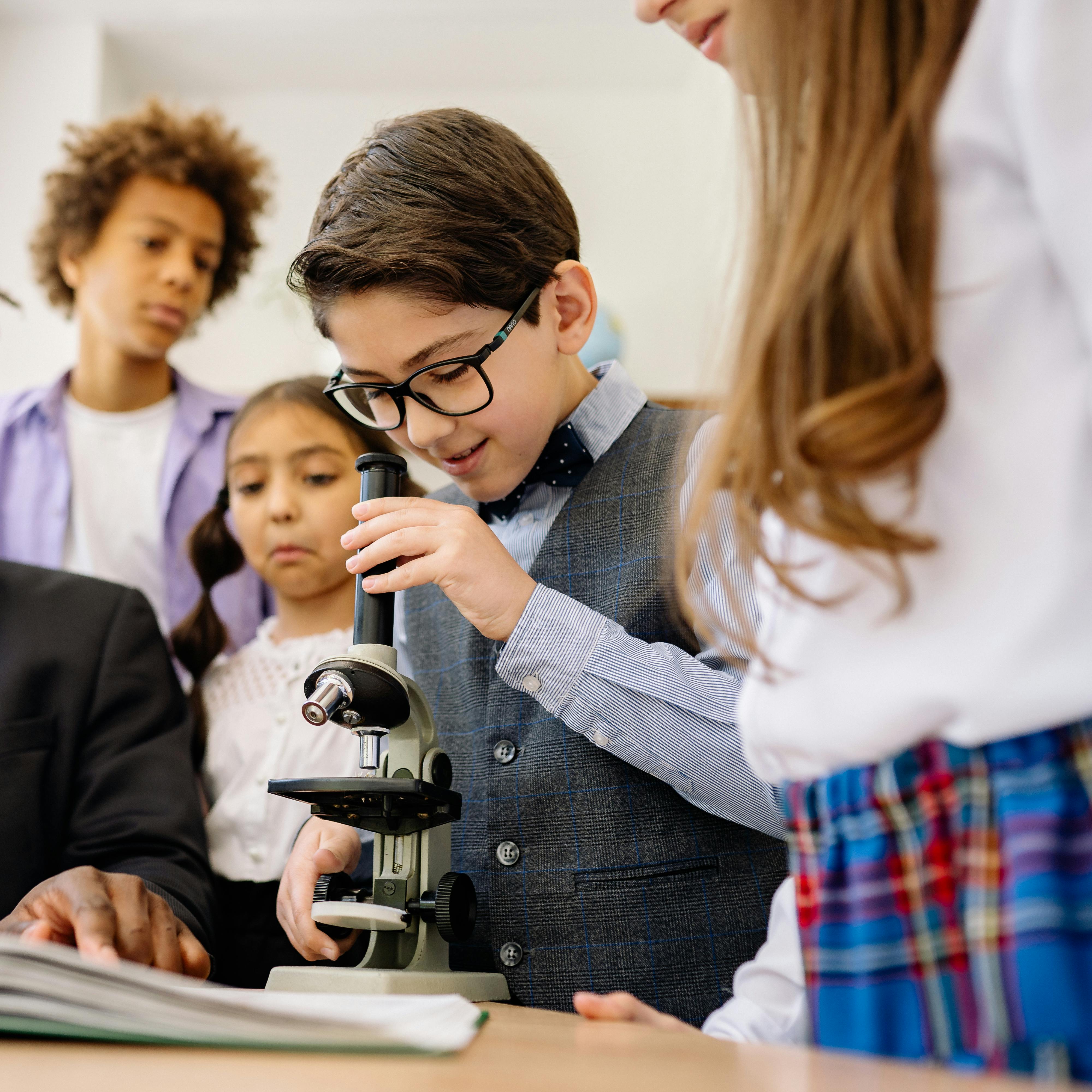
In conversations we have with educators and community partners, one truth keeps rising to the surface. Students do not need more talent. They need more access.
Access to role models.
Access to hands-on learning.
Access to real stories about STEM careers that feel reachable, not distant.
And for too many young people, especially those in underrepresented communities, that access still depends on chance instead of design. Not because students lack ability. Not because they lack interest. But because they have never been invited into the spaces where STEM careers begin to feel real.
This is why equity in STEM matters.
It is not about giving students an advantage.
It is about removing the barriers that never should have existed.
Educators, nonprofits, public agencies, and private companies each hold a different piece of the solution. When those pieces come together, students see a future they can step into instead of a world they are watching from a distance.
Why STEM Access Matters for Both Classrooms and Communities
Students in historically marginalized communities show equal curiosity for STEM as their peers, yet they experience significantly fewer hands-on STEM opportunities, fewer STEM role models, and less visibility into what STEM looks like in real life.
A recent NSF-funded study showed that students’ sense of belonging in STEM increased dramatically when they met STEM professionals who reflected their community. Meanwhile, community-based STEM programs reported significant growth in student confidence and persistence even when academic scores stayed the same.
This is important for educators and organizations alike. Because belonging is a predictor of persistence. And persistence is what shapes long-term engagement in STEM.
1. Visibility is the First Step Toward Equity
Students can’t pursue careers they’ve never seen. Showing them is a shared responsibility.
Educators introduce the spark inside the classroom.
Organizations bring the real-world context that turns that spark into identity.
When a classroom teacher introduces circuitry, and a local company provides a lesson plan or a visit that shows how circuits power a city grid, students experience a connection that feels real. When an organization hosts a weekend maker workshop at a community center, students who could not attend after-school programs suddenly get to build something with their hands.
Visibility is about proximity. It shows students that these careers are a part of their communities and that they are achievable.
2. Hands-On STEM Learning Should Be the Norm, Not the Perk
In many underserved regions, hands-on STEM learning is treated as a bonus instead of a baseline. Yet hands-on learning is what increases memory, boosts curiosity, and helps students see themselves as problem solvers.
Educators ignite this through inquiry-based lessons. Companies reinforce it by bringing real-world challenges to the students.
A math lesson becomes more engaging when a water engineer brings real data from a local river. A science project becomes more meaningful when a manufacturing company shares materials for students to test and prototype. These experiences don’t just teach content, they teach identity.
3. Bring STEM Experiences to Where Students Already Are
Equity means meeting students in their own environments, not expecting them to travel across the city for opportunities.
Public libraries.
Community centers.
Housing organizations.
Local parks.
Faith-based programs.
Schools (classrooms and after-school programs)
When organizations collaborate with these spaces, STEM becomes woven into the fabric of the community. Educators no longer carry the entire responsibility alone, and companies build authentic relationships with the communities they serve.
These moments change perception, and students begin to see STEM as something that lives in their neighborhood.
4. Align Learning With What the Community Needs
Equity becomes meaningful when learning matches the realities of the local economy.
If a region is expanding clean energy, students can explore turbine design, battery storage, and grid modernization.
If a city is investing in public health, students can learn about medical devices, digital health tools, and lab science.
If a county is modernizing transportation, students can dive into sensors, automation, and mobility engineering.
When industry and public agencies provide relevance, role models, and context, then educators can bring these topics alive in the classroom. And that's what sparks the students’ curiosity in learning and their understanding of the career opportunities in front of them.
5. Build STEM Pathways With Educators, Not Around Them
Teachers are the bridge between exposure and understanding. They help students connect what they see in the community to what they are learning in school. They identify who needs more encouragement and who needs more challenge. They create a safe and trusted environment that lets students take intellectual risks. But teachers don’t always know what companies are up to in their communities or what jobs these companies are looking to fill.
When educators receive high-quality STEM training, ready-to-use lessons, and real support from community partners, equity multiplies. One teacher can shift the STEM identity of an entire generation of students.
This is why it’s important for companies and agencies to collaborate with educators; it’s a partnership that makes the pathway real.
Final Thought: Equity in STEM Starts With Showing Up Together
STEM careers will continue shaping the future, and that future depends on who gets access to those careers. Educators, nonprofits, public agencies, and companies all play a critical role in expanding that access.
When organizations, agencies, and educators work together to bring STEM to life in classrooms, students begin to see themselves in STEM and prepare for a career in the field.
If your organization is ready to design inclusive, community-centered STEM pathways that open doors for students, WhyMaker would love to partner with you. Book a call.
Sources
- National Science Foundation. STEM Interest and Equity Study.
- STEM Learning Ecosystems Community of Practice. Impact Research.
- Digital Promise. Learner Variability in STEM Engagement.