As a new year begins, many educators and community leaders are reflecting on the same question: Are students being prepared for the world they are about to enter?
STEM careers are changing quickly. According to the U.S. Bureau of Labor Statistics, STEM jobs are projected to grow by about 10.4 percent over the next decade, much faster than most non-STEM roles. Growth, however, does not automatically mean readiness.
Students are being asked to think about their futures earlier than ever, yet many still lack exposure to the skills, roles, and problem-solving they will encounter in STEM careers.
What STEM Careers Require
Today’s STEM careers demand more than technical knowledge. Research from the World Economic Forum consistently highlights skills like problem-solving, systems thinking, collaboration, and adaptability as essential for the future workforce.
Yet many students experience STEM as isolated subjects rather than interconnected systems. They learn formulas without context and processes without purpose. When learning feels disconnected, students struggle to see where they fit.
Preparing students for tomorrow means helping them practice how to think, in addition to what to know.
Why Exposure Builds Confidence
Confidence is one of the most underestimated factors for success in STEM. Not confidence measured by test scores, but confidence built through exposure.
Studies published in the Journal of STEM Education show that early exposure to applied STEM experiences increases student interest and persistence, even when academic performance remains unchanged. When students see how skills are used and who uses them, learning becomes more meaningful. Exposure questions students often carry quietly:
- How is this skill applied?
- Who uses it?
- Why does it matter?
Without those answers, students often disengage, not because STEM is too difficult, but because it feels distant and abstract.
From Learning Content to Practicing Thinking
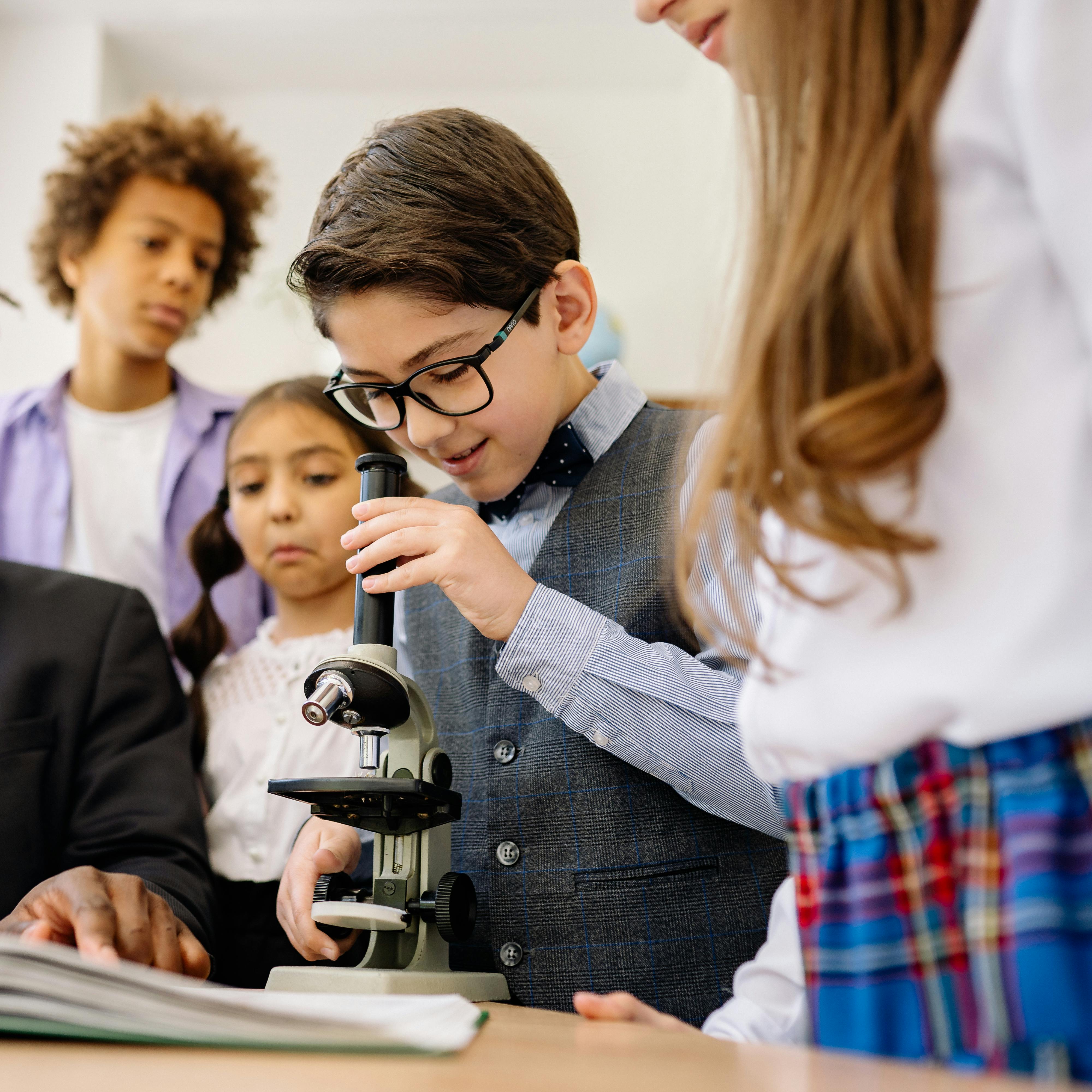
The most impactful STEM learning happens when students practice thinking the way professionals do. That includes:
- Exploring problems that may have multiple correct answers
- Working within constraints
- Testing ideas and then refining them
- Understanding how different roles contribute to a solution
These habits aren’t developed through lectures alone. They require learning environments where curiosity is encouraged and iteration is expected.
Educators build the foundation for this mindset. Community partners and industry organizations provide the context that helps students see why their learning matters.
Supporting Educators Multiplies Impact
Research from Digital Promise shows that teachers who have access to ready-to-use career-connected STEM resources report more consistent implementation of hands-on learning and higher student engagement.
As WhyMaker Founder and CEO Liz Gallo often says,
“Teachers don’t need more pressure. They need partners who empower them with more resources and support.”
When educators are supported, students benefit.
What Students Need Most Right Now
As the year begins, the opportunity is not to add more content, but to deepen meaning. Students need:
- Visibility into careers they have never seen
- Opportunities to practice real problem-solving
- Guidance that connects learning to purpose
- Adults who help them see that they belong in the future being built
When learning focuses on skillsets instead of just subjects, students begin to see themselves as contributors.
Preparing for the Future Starts Now
STEM careers will continue shaping the future. The question is not whether that future is coming, but who will be prepared for it.
At WhyMaker, we work with educators, organizations, and public agencies to design custom learning experiences that show how STEM careers actually function. Together, we help students build the confidence and thinking skills they need to succeed in their future careers.
If you are ready to support future-focused STEM learning in meaningful ways, we would love to partner with you.
Book a call to start the conversation.
Sources
U.S. Bureau of Labor Statistics. STEM Employment Projections
https://www.bls.gov/emp/tables/stem-employment.htm
World Economic Forum. Future of Jobs Report
https://www.weforum.org/reports/the-future-of-jobs-report-2023
Journal of STEM Education. Early STEM Exposure and Persistence
https://www.jstem.org/jstem/index.php/JSTEM/article/view/2469
Digital Promise. Career Connected Learning and Educator Support
https://digitalpromise.org/initiative/career-connected-learning/